HOW TO PERFORM AN AUTOPSY
by Juli Kearns
How to Perform an Autopsy Intro and TOC

How to Perform an Autopsy Intro and TOC
While we might inherit instinctual compulsions that would seem as oddly unique to survival and insensible in their specificity as what drives infant green sea turtles into the ocean waves, we are so entrenched in culture and separated from such natural knowledge that for all intents and purposes we are born foreigners to this world and must learn everything either by the casual osmosis of observation or by applied study. Also, we are born utterly and naturally helpless, so that whereas a baby sea turtle follows the command of instinct in its immediate mobility, we are just as naturally intended to depend upon and bond with our caregivers, naturally built to trust them, to share sympathy and compassion, emotions that are fundamental to and part and parcel of the many intricacies of communication and bondedness we are taught and which we seek, and seek as well the rewards of approval that encourage our efforts at mimicry. We come to know what we know by our many ways of being taught, by both personal caregivers and by the broader community, concertedly, and casually, even unwittingly. By the like nature of their own infantile schooling, all these humans share with us the behaviors of what is commerce in the broadest social sense of the word, and the complex histories that are intended to tell us the whys and wherefores before we can form the most innocent and childish questions of context, so that before we know it the world simply is what it is and always has been. And despite and because of this, we learn to make comparisons and judgments that all arise from our most primitive demonstration of selfhood when we one day feel an injustice has transpired, we have been treated unfairly. Eventually we must, or should, determine the real function and utility of all we’ve been taught, and whether it was right and sane. Some feel so at home in what they’ve been taught they are comfortable where they are and by and large accept it with perhaps some personal adjustments. Others may be compelled to, piece by piece, break it down, pry the machine apart, and examine the cogs and wheels of what seemed like truth, the facts, when we espie perhaps what might be the slightest tell that there’s a break in the system. We may realize something is wrong but then not have a right thing with which to replace it. We may not be able to trust what is right according to our own experience, because beliefs based on incomplete personal observation can often be in error, but we will know that something is wrong, the machine is not working as we’ve been told it should. Something in the machine itself tells us that it’s not working as it should.
It’s in the spirit of the above extract that I approach “How to Perform an Autopsy”, one of extreme circumspection and devoid of the filters of nostalgia. This isn’t a memoir. It’s an interrogation of the past, a hard examination of memory, which can form a false portrait of history, misdirections established in earliest childhood through what we are told by others, people we are born to trust, upon whom our lives depend. I have followed a rule of circumspection when writing my fiction, but I hit a wall with my fiction several years ago, and realized in June of 2023 that if I was going to be able to continue creating, I needed to compose a non-fiction.
The contract and artistic statement is this, to the best of my ability, no fictionalizing, I will adhere as closely to the truth as possible, and if the truth as I know it is uncertain, I’ll say it is, and if I can’t find the truth, I’ll state that as well. I’ll not fabricate dialogue, so what there is of it will be spare with no artificial expansion upon the memory of a conversation. I’ll not conjure details I don’t possess in order to enrich a scene for the imagination and engage the senses. Others may do this in memoir—and I understand if they do, the artistry and reasoning, but that style of embellishment can’t be done here. This is not a memoir but a deconstruction, I need to be as precise as I am capable of being, because my parents were voids, dedicatedly silent about their pasts, except for lies and twisted stories, as I have found was the way of their parents. It is one thing to inadvertently remember a false past, and another to create false pasts, even if by silence, in order to fabricate a false mirror and portrait.
I have made my peace with writing in the first person. It’s difficult for one who has always written fiction, and extremely difficult for an individual who was told they had nothing to say, nothing the world would want to hear, which is another silencing command. It was one that didn’t wholly rule my life, but my attempt to speak truths in my fiction was couched in diversion, which is good for fiction only up to a point, and after that point fiction becomes untenable.
I have made my peace with this endeavor being lengthy, taking up space, which it will be, and which I must allow it to be as I’m exploring processes of authoritarian soul murder and its effects, digging up what I can of histories that weren’t divulged to me, placing it all in context of not just family generations but society as well. For individual traumas have relationship to what is systemic and accepted.
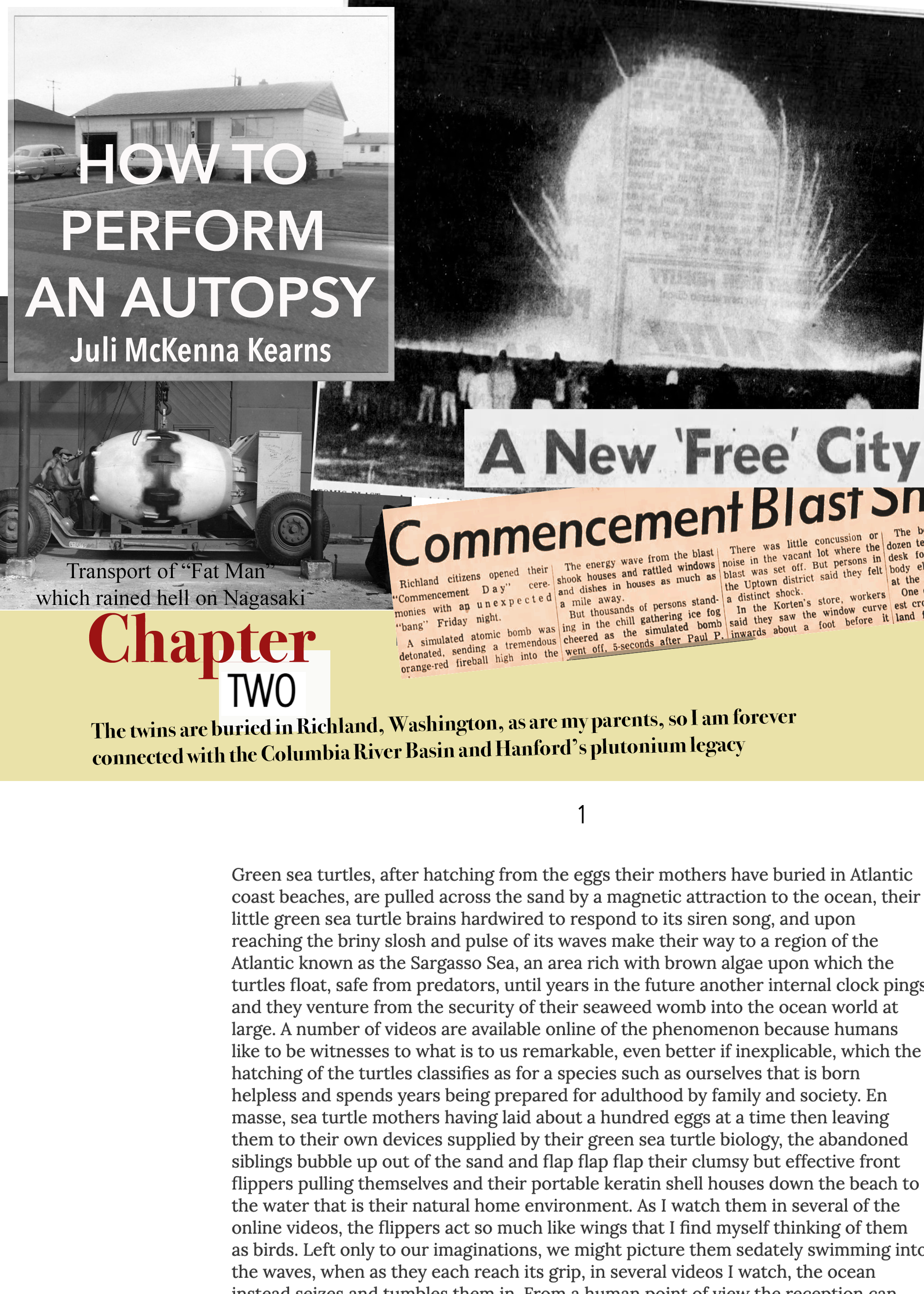
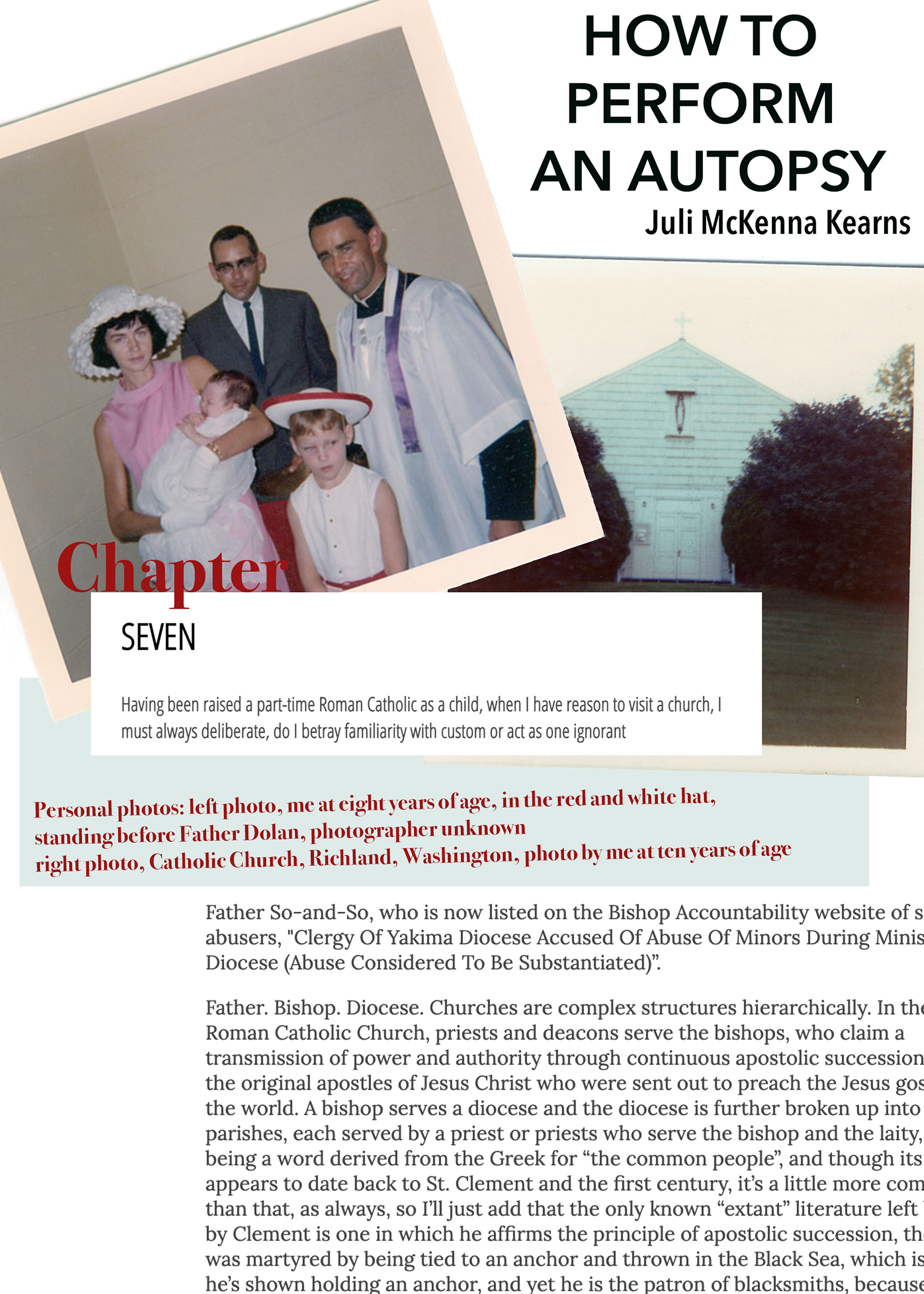
I spent a good portion of my childhood in the town of Richland, Washington, created by the Manhattan Project, which was a secret town, and demanded secrecy of its imported citizenry. I was a resident there long after the Manhattan Project, but the spirit of secrecy was built-in and still operational. There is much to be learned there about society, the childhood fictions we’re sold, on compartmentalizing and living with cognizant dissonance for the preservation of secrecy, so that false, misleading myths may cut off at the root those that want real introspection. On the familial level, I am examining why my parents attempted to kill me when I was seventeen, why I covered this up for them, the complexity of trauma, its minimalization, how we dust our feet off and try to distance ourselves as part of the fight or flight process, in order to survive, and how and why society demands that we do this.
My dissection will include years of my researching decades of newspapers, reports that reveal how my family and extended family for generations has been well-acquainted with violence, which means trauma, sometimes even murder, even murder followed by suicide. It takes time to tell a story, and I will take my time with this, not as a luxury but as a necessity for the preservation of complexity and a constant guard against the intrusion of artificiality. A minor example is a simple tale passed down through generations of family of a couple that "lived happily" ever after on the frontier, why I would question this based on one simple paragraph of "facts", and my eventual discovery of a newspaper article in which the husband was exposed by the community newspaper as an abuser responsible for his wife's death, which was a rare thing to happen in the mid 1800s. I am ruthlessly unsentimental. However, I don't overlook where good is to be found.
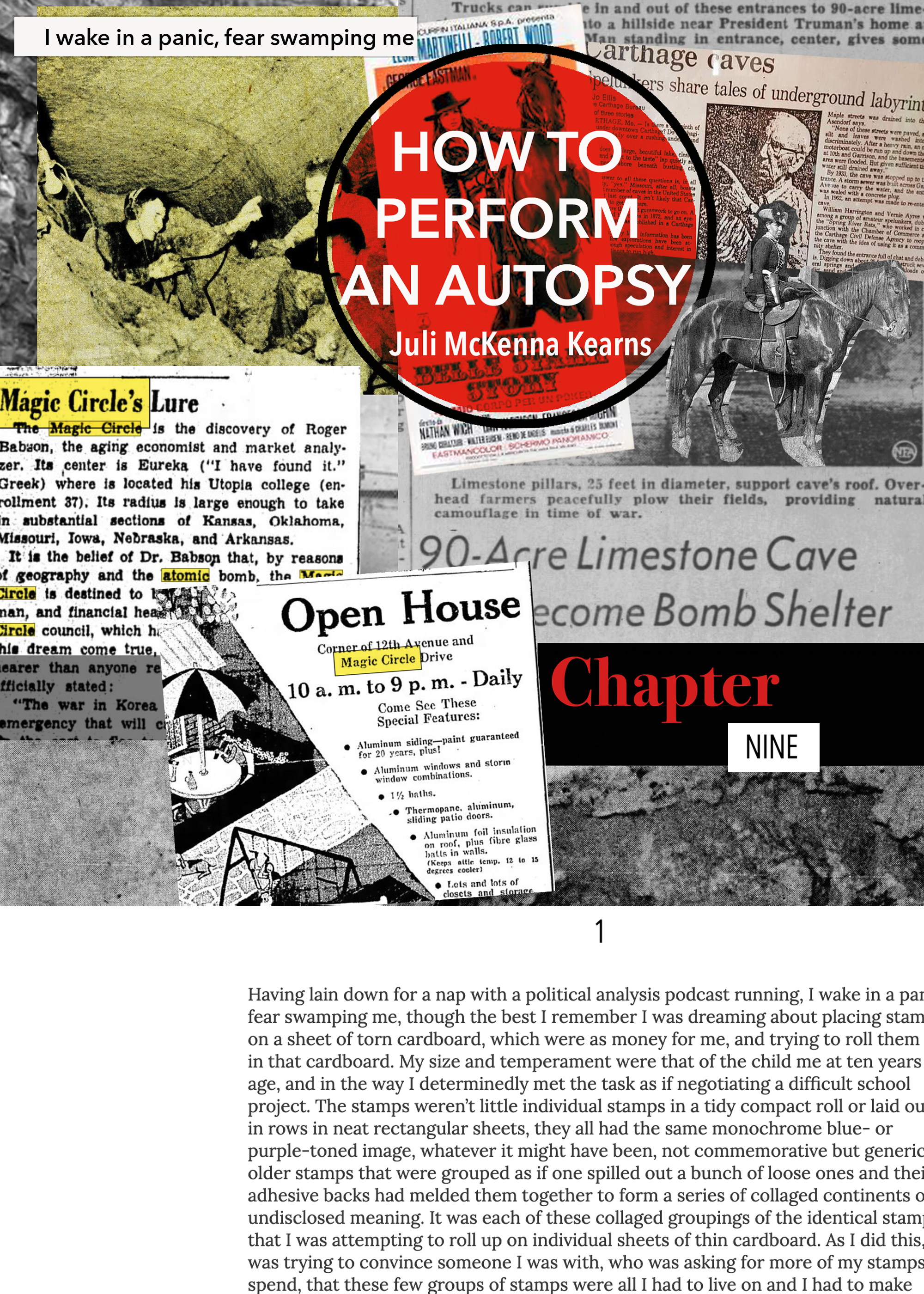
Richland had its underground double, as did other places in which I lived. Richland had the rumors of its secret underground system of bomb shelters connected by tunnels. Carthage, Missouri, had its rumors of a vast system of unexplored caverns beneath the city. Nearly every place has an “underground”. In various houses I lived in we also had our basements and “ghost” rooms to which was relegated a secret and original geography over which lies and false myths were built in order to force the sound illusion of a known life, a false map. These undergrounds are also known as the shadow, the bogs into which recede what can't be publicly countenanced, even mountains of bodies that have been accepted as the collateral damage of human nature, and the conflicts of its various supremacies.
ON NAMES: This dissection changes the names of many. I sometimes name those who are deceased who I knew in a positive way.
ON MY NOT CAPITALIZING "BLACK", "WHITE" OR "INDIGENOUS": While the capitalizing of these terms may be very appropriate in other contexts, because I am at times exploring multi-"racial" individuals and communities, it would be difficult to insensible in this work to define them with with capital letters, also in respect of my doing what I can to explore how their race is a political construct rather than a biological fact, for "race" does not exist in science. This is not a denial of racism, and White supremacy, which does exist, and relies upon its artificial constructs of race. Toxic supremacies exist in other societies as well, not only in Euro-American White culture, but I am an American who is principally writing about America.
There will be a total of twenty-one chapters.
One
Two
Three
Four
Five
Six
Seven
Eight
Nine
Eleven
Twelve
Fourteen
Fifteen
Sixeen
Seventeen
Eighteen