
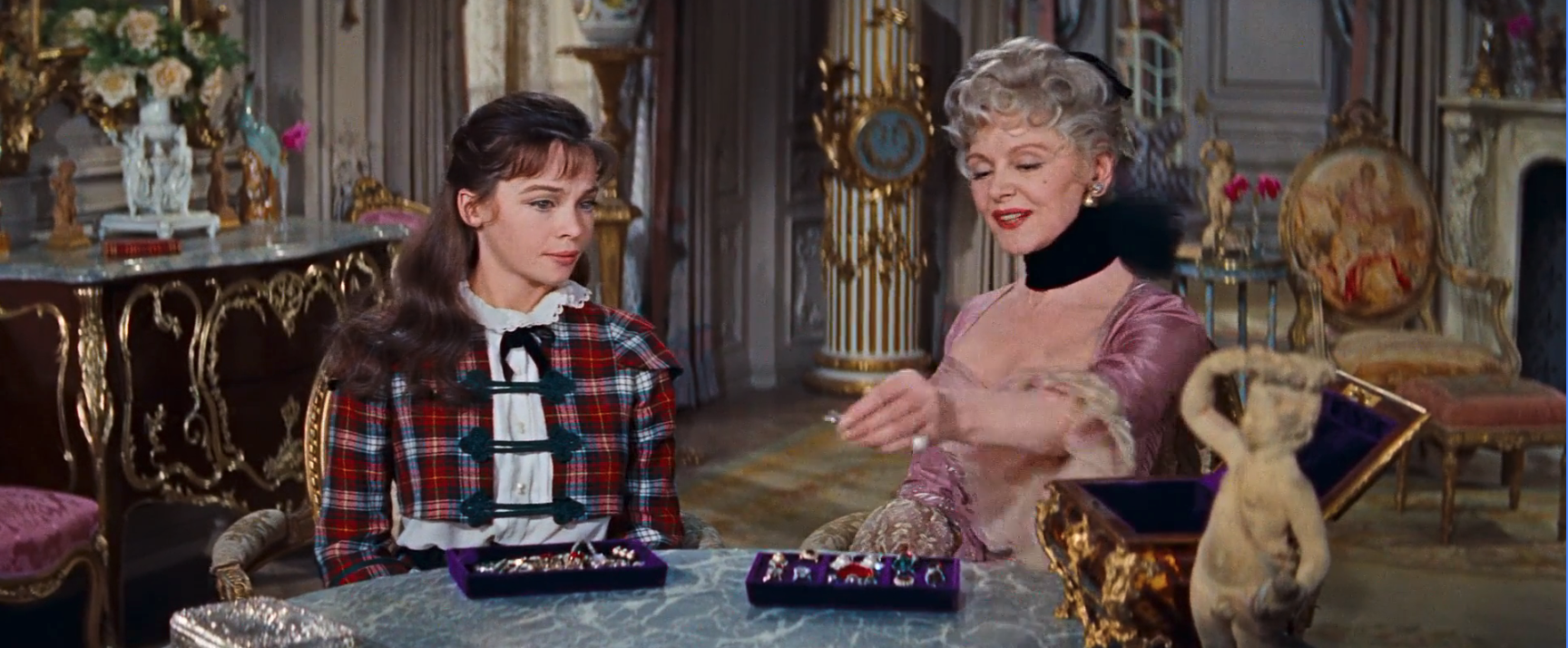
Colette, the writer and courtesan, was not a feminist
and had questionable boundaries
All my books by Colette I gave away to a friend when I was twenty-three. I think I had most everything she'd written, at least what was available at the time. It was a stack. As a writer, I was eager to read women's voices and in the mid-70s to early-80s there wasn't that much literature by women available, not that I was hearing about, not even when I was in college, for which reason I had everything by Colette, plus she was being rather vigorously promoted during that period. A friend of mine began reading Colette and by then I was sick of Colette so I gave her my books. "Are you sure?" she asked. "Yes," I said, and I was. She was entranced by Colette, while she'd not been a favorite of mine, and by then I had completely soured on her. It was Cheri, I believe, that had done me in. I was sick of the jewels. I was sick of her sensual mode of description. I was sick of the subject matter. The hedonism. The lovers. The food. The business of the highly-transactional relationships. All of it. I no longer absorbed any of the prose as journalistic capsules of history. I no longer deliberated on style. It was now all just Colette and suddenly I didn't like Colette. As I said, I think it was Cheri that soured me, about a woman's affair with a much younger man, which I was aware was based on her affair with her sixteen-year-old stepson, who had been her stepson since he was four. That did me in. Colette became, for me, narcissistic and distasteful. It wasn't a tumble off the bookshelf fall from grace. Colette had never been an ideal for me, she had never been my bookshelf "friend", I had been lured paragraph to paragraph by the history, the mode of living and a perspective on relationships that was alien to mine. The descriptions were indeed lively with sensuality, but there was a curious lack of a voice of self-interrogation. Everything was at face value rather than there being the searching voice of a more objective self-inquiry. She took so much for granted in the purity of her observational powers, or so it seemed to me. I wondered if Colette had not written about lovers and more lovers, if she hadn't been as scandalous as she was perceived, as notorious, if her writing would have been as popular. If she had been political, would she have been as popular. She was later promoted as feminist though her works, while supposedly apolitical, were antifeminist, though she benefited from feminism. It puzzled me, that because of her lifestyle, because of her career, a woman was promoted in the literary world as feminist when she was hostile to feminists.
The above is what I remember of my readings of Colette years ago. Writing this, I've tried to refresh my knowledge of Colette, purchasing again a couple of her books, but I'm resistant after a couple of chapters, not interested in returning to her output.
Colette famously said, "You know what the suffragettes deserve? The whip and the harem." But where did that line come from? It took a bit of digging but I find it is from the 11 Janvier 1910 Revue Paris-Théâtre but I don't have the issue so I don't know the context. In the 1970s we had the rise of conservative activist Phyllis Schlafly, who despite benefiting from feminism, was vigorously anti-feminist. Colette was no Schlafly. but having read so much of Colette's work, despite the fact she was transgressive, I had come to view her as complicit with a classist, patriarchal social order.
My perceptions of her writing, her antagonism for suffragettes, none of this means she wasn't a valuable voice. One can misconstrue and think that just because I'm not partial that means I also believe the world was better without or that the artist made no serious, worthwhile contribution. Colette did. If I'd not read her work, I'd count it as a hole in my education. Reading Colette, I learned a great deal.
In the early 1990s I worked as a personal secretary for a woman journalist-columnist and my first day I decided to visit the cafeteria where many ate. I found myself invited to a table shared by several other secretaries on the same floor. Sure, why not. And then I learned why not. This will sound like a WTF you're kidding me story, but it's not. They were all women and immediately launched into talking about the jewelry they received from their husbands over the years, displaying ring fingers, their husbands spoken of as an alien breed with whom they had nothing in common, which they seemed to expect was the same of all couples and was even a point of pride that there were the men who did their own male-oriented things, the women did their own female-oriented things, and thankfully the husbands weren't interested and kept to their own hobbies because they were an annoyance. Their assessment was that a woman shouldn't marry unless she had healthy monetary compensation. And jewels. Shades of Colette's heroines but as the conservative, middle class American. I visually didn't fit in with the group, They were attired in clothing marketed for their careers and I wore jeans, thrift-find tailored women's suit jackets from the 1950s, and high-top tennis shoes (solid for walking to and from the subway), yet they had invited me over, and I had taken the invitation on good faith. I recall what I knew was a weirdly critical, condescending attempt to prompt my view, along with a targeted eye on my no-diamond ring finger. They knew I didn't fit in with the table—which had nothing to do with their being most of them a generation older—and the game perplexed me. As I'd been asked, I said that my spouse and I enjoyed one another's company, we shared the same interests, that we were co-partners helping one another, and I didn't have a jewelry box. The men they described as being their husbands, I was familiar with such and chose to not be around them except for when I had to be, I wouldn't have married such a person, but they did. And, as I was learning, I wouldn't have normally chosen to be around these women either, which had everything to do with their attitude toward me. My view is marriage exists for many different reasons and as long as the pair are in agreement as to the purpose then that's fine and none of my business. But that's not what this conversation was about, it was to put me in my place, I had been asked to their table in order that I should know their judgment of me but for what reason I didn't know why. The woman who had invited me over to the table sniffed and said one day I'd regret my choice not to marry for financial security. At which point I stood and left the table, I never shared a glance with any of them again, I never even bumped into them as I worked in the office of my boss rather than out on the floor, and after one other attempt at the cafeteria I decided the best thing to do was have a snack in the office that I shared with my boss. She had been in the cafeteria for a bit that day and had seen me at the table with the others and she asked how it went. I must have told her how it went as she said she wasn't surprised, and we left it at that. The world of that secretarial pool was to me a bizarre one that I hadn't been aware even existed any longer. I also considered that their jewels were likely not of the quality which Gigi's aunt held were worthy.
Lolita, My Love and Gigi and Lerner of Lerner and Loewe
I'm not going to say "I don't know why", because I know exactly what had me recently thinking of Gigi and Lerner and Loewe's "Thank heaven for little girls", but I decided that after many many years it was time for me to revisit Gigi, a film that had rubbed me the wrong way on my first viewing, many years ago, because of "Thank heaven for little girls", and Louis Jourdan romancing Leslie Caron, who was twenty-seven playing a girl of fifteen. The "why" was I'd finally listened to the entire recording of the 1971 musical, Lolita, My Love which attempted to tackle Vladimir Nabokov's book with disastrous result and didn't make it to Broadway. Even Nabokov had initially said the material wasn't suitable for a play, and he didn't believe a girl should be daily performing Lolita, yet he was persuaded to grant his permission.
Lerner, of Lerner and Loewe, was the lyricist, Loewe didn't work on this project, and what Lerner had to say to The Philadelphia Inquirer about Lolita, My Love was, “I think the story is much more pertinent now than when the film was made. Humbert is such a tragic, flawed, misplaced romantic, lost in post-World War II.” I've the news article sitting in front of me.
There you have it, in his own words, according to Lerner, Humbert was a misplaced romantic. In other words, if he'd lived in another time he wouldn't have been so misplaced.
In another article, the producer, Norman Twain, said it was the best thing Lerner had ever done. "And the work itself is so valid, so viable. Especially today. The subject of an older man attracted to a younger girl can be discussed more openly than it could when the novel first appeared. The moral of 'Lolita' is that total obsession—with anything—destroys a person...whether the obsession is a little girl or philosophy. A personal obsession. I don't have any that I'm aware of. Involved with a nymphet? Yea, I could be—absolutely! There are certain types of girls—little girls—nymphets, that all else being equal, would turn me on. If you met them in a motel by chance..."
There you have it, in his own words, according to the show's producer, he was game for a nymphet. A certain type of little girl would turn him on.
William Collins, of The Philadelphia Inquirer described Annette Fera, playing Lolita, as "a delectable lollipop...who is not 14 but 15 and will be making ner Broadway debut..." He outlines the plot thusly: "Humbert...with a passion for pubescent girls, is smitten at the first sight of the 14-year-old Lolita in shorts and halter. He marries her mother to be near the girl; the mother is conveniently killed in an auto accident, and Humbert sets up housekeeping with his nymphet in carnal intimacy soon spoiled by Lolita's errant ways." He describes it simply as Nabokov's comic masterpiece—and while there's a good deal of dark comedy in the book, it seems to me that Collins has missed the point.
Another article, on 17 Feb 1971, very widely distributed, chose to quote Ferra, the girl playing Lolita. "There's nothing dirty about what Humbert does. It's not a crime. In the end, Humbert is cured. It's just a love story." Was she parrotting the beliefs of adults around her, which were not the views expressed in the book? After the show initially bombed, she was exchanged for Denise Nickerson, who was thirteen, and it still bombed.
John Neville, who played Humbert, in an interview from 16 March 1971 is recorded as saying he'd asked Stanley Kubrick what he would have changed, if he could, about his film, to which his response was he would have made Lolita younger. "You know men subconsciously would prefer to have a very young girl for a lover than a woman," Neville says, "because they present no problems."
I imagine that Kubrick, instead, would have wanted Lolita to be younger in order to clearly separate her from an age group that was considered by many to be "of age" physically, if not socially.
Maybe, if a younger Lolita had been cast, one that fit the book, rather than Sue Lyon, who was fourteen, then just maybe the producer, James B. Harris, wouldn't have become sexually involved with a girl under fourteen years of age. Which doesn't excuse his becoming sexually involved with Sue Lyon.
Lerner's view of Humbert wasn't the only one that was demented, but knowing that Lerner viewed him as a misplaced romantic, born at the wrong time, is why I decided to watch Gigi again, even though I hadn't liked the film from my first viewing when I was, I don't know, maybe a teenager, and I'd only seen it perhaps twice. It was because of having only seen it maybe twice, and a long time ago, I decided I should watch it again.
Georgiana/Georgianna/Georgina/Georgie/Georgia Powers Carhart, sometimes Ogden, and G. P. Carhart or Madame Carhart (she's hell to research in news archives due the variations)
Though I would be watching Gigi to check out if Lerner's perspective on Humbert was evidenced in his view on the young Gigi, I was rather more preoccupied with an extended family member of mine, who during the Gilded Age, when not a girl but a woman, had been the mistress of a wealthy man. She could perhaps even have been viewed as a courtesan, indeed she was more a courtesan than what's typically defined as a mistress..
Colette was from the generation of a great-granduncle of mine, born 1861 in Ohio, who married first, Georgiana Powers, a woman from Kentucky who he'd likely met when he was in New York studying at the newly-formed Art Students League and she would have been in the city as an aspiring singer and actress. That's my guess. As he was from Missouri and she was from Kentucky and Maryland I've no idea what else might have brought them together other than New York. They married in 1887 and she and the professor settled in Kansas City, where he was in education. He was not from a background of wealth, he was middle class, he didn't attend an elite university, he'd graduated from Missouri State Normal School. But he was, for a while, written up as a very promising individual. After their marriage, she studied singing as a contralto in Kansas City, then by the spring of 1892, when she's returned home from studying that winter in New York, it's announced in the paper that she is instead a mezzo-soprano and of a decided excellence, a promising career ahead of her. From then on she is back and forth between New York and KC. Their divorce, which made the Missouri papers in 1899, had her declaring her husband had abandoned her four years prior, and the news commenting she was a strikingly handsome woman and "greatly admired" which was to "her husband's uneasiness of mind." Other news accounts gave her as a stunning beauty. I know from a couple of books with information on the then well-known and influential cultural critic, James Gibbons Huneker, that for several years she'd already been in a relationship with Huneker. He also divorced in 1899 and asked Georgiana to marry him but she said no as he wanted to accomodate another woman in their home as well, and he married that other woman instead. In 1895, the year Georgiana had claimed her husband abandoned her (one 1895 story said he had quit his job to move to New York, but a bio published at his death claims that was the year he went abroad as a special correspondent of Gody's Magazine), she had been given a two-column photo spread in a New York paper with the accolades that she'd become a success in three seasons, and had sung at the Metropolitan Opera and in the best drawing rooms, In various articles, she would be given as "famous", a "star attraction", and even nationally known.
Her husband had been periodically in New York with her as in 1893 he and a well-known Broadway tailor, and a millionaire mining engineer from Denver, were arrested for loitering in front of the Coleman House. When the officer had asked them to move, they'd refused, then had "abused" the officer and when he walked away they followed him, at which point they were arrested. The Coleman House was a legitimate hotel but it had its share of scandals and it seems gambling could be found there. The famed journalist, Nellie Bly, did an article in 1894 on the shady underworld of gambling and procuring women for wealthy men that went on in some rooms at the Coleman. The reason I include this small bit of information is because Carrington, then a Kansas City school principal, was hanging out with a millionaire, which speaks to his social flexibility at the time. I have the feeling they were probably just a bit drunk, probably more, though they weren't charged with public intoxication. Considering the millionaire, they would have had good legal representation, and the paper relates they were shocked when they were found guilty and fined a dollar each, which seems a minor pay-us-for-paperwork rebuke. The three left "vowing vengeance". I don't trust police, but I assume there's more to the story that would make the association of the millionaire, Carrington, and the tailor interesting. I've found the tailor had a habit for several years of making it into the paper. The year before, an actress had slapped the tailor for being fresh with her on the street and he called the police on her, saying he had been calling his poodle and wasn't chirping at her. Another friend of the tailor's, a wealthy real estate dealer and horse dealer, Henry Spire, was at that time in court due being sued by Esther Jacobs, a concert and opera singer (she had sung with the American Opera Company), for breach of promise of marriage. She was suing for $50,000 she held to have lost in earnings as he'd forbidden her to sing in public after their engagement, which he'd insisted she keep secret. He admitted he'd spent $40,000 on her and her family over three years ($1,520,000 in 2026) but insisted he had not promised to marry her. The tailor said that he went out several times with the singer's sister and the family had attempted to insist he was engaged to her, though he said he had no intention of marriage, which was confusing as he was also in the papers in 1889 due being in a carriage accident with "his wife". The singer's family said they were inclined to believe he didn't "chirp" at poodles. Esther Jacobs said she was twenty-seven but according to the 1870 census she was thirty-three, and a sister was recalled as she'd lied about Esther's age on the stand. The singer won the suit, then lost it, then eventually won it again. It may not have helped Sire's case that he had been keeping another woman for eleven years, and also another "dear female friend". Esther was considered respectable and accounts of her in court never wearied of describing her refinement and loveliness.
After a steady appearance in newsprint, Georgiana suddenly disappeared from the news in 1898 and 1899, except for her divorce in June of 1899 which was immediately followed by an announcement she was sailing to Europe with friends. Was she perhaps not in the papers in 1898 and1899 because she was already traveling abroad? But what about the affair with Huneker? He was often in Europe, might she have been sometimes with him?
Georgiana returned to the American stage to be in the Broadway musical Mam'selle 'Awkins which opened in February 1900 then went on a national tour. She was thirty-five, she likely saw her career was not ascending as she'd hoped. Then when Mam'selle 'Awkins was in Atlantic City she met a man named William Butler Ogden, a wildly wealthy nephew of the railroad magnate of the same name who authored nineteenth-century Chicago as its first mayor, and that meeting became an assignation that took care of her life for the next thirteen years. The lesser Ogden was separated from his wife who now resided in England, and he and Georgiana sailed off to Germany where she would live with him as the mistress of his table and household, only having shaved seven years off her birthday, and I think it was only seven as she then would have been fifteen instead of twenty-two when she married my great-granduncle. Georgiana and Ogden left for Dresden in October of 1900, which would have been immediately after her playing the Athens Theater in Ann Arbor with Mam'selle ''Awkins, which had been four months in New York, three in Boston and three in Philadelphia. Supposedly she continued her musical studies in Dresden, and sang in opera, at least this was her story in later years, that history never including her association with Ogden. Documentation I find for her during that time always gives her home as Dresden. In former years, when not on his big estate in Maryland, where he seriously pursued fox hunting, Ogden had often gravitated to the south of France, so Dresden would have been Georgiana's choice as it was the home of the Semper Opera, which was the pole star for opera at the time, Richard Strauss premiering nine operas there, including Salome in 1905, and Der Rosenkavalier in 1911.
In the midst of her time with Ogden, in 1905, the papers made much of the famous sculptor, and "woman hater", John Massey Rhind, having met the "widow" Carhart (that first husband was still alive in Chicago) on a lengthy cruise and that they were engaged in Genoa, the wedding to take place in November. And yet Rhind was married since about 1889-—erhaps he had divorced and they remarried later, or they had merely separated, but a July article has him at a party with his wife—and Georgiana was with Ogden from 1900 to 1913. Plus, it's confusing that the papers give Rhind, who was married, his wife in the Manhattan census with him in 1900 and 1920, as a famed woman-hater who was no longer a woman-hater as Georgiana had captured his heart. I find nothing else on Rhind being characterized as a hater of women, but it was the stand-out description of him in the articles, other than his being the famed sculptor. At the time, to describe a man as a "woman hater" could mean he was homosexual but I find no biography hinting that he might have been. Also repeated in every article was how the pair paid no mind to being very public with their affection on the ship, they appeared not to care who observed them courting in the moonlight.
From a middle-class professor and newspaper artist, to a famous critic, to the epitome of Gilded Age wealth, to a famed sculptor, and back to the epitome of Gilded Age wealth—Georgiana had ultimately chosen Ogden and was Ogden's mistress during the fin de siècle in its dallying late at the party stage. Between 1908 and 1911 they are occasionally found in the United States, traveling separately but together, she is "of Dresden", he is "of Paris". To look up the hotels they stayed at is to find they were all premiere hotels of the Gilded Age. I don't know the reason, but they moved to the Miami area where he would grow oranges on a large estate, his other hobbies being yachting and throwing parties and operating a tavern until prohibition landed. Georgiana's sister located there as well, her husband also growing fruit and in some business ventures with Ogden, at least once stated as his brother-in-law in the paper, and Georgiana several times given as Ogden's wife, though she was a "cousin" in the census. Then in 1913 Mr. and Mrs. (Georgiana) Ogden were reported as hosting the twenty-one year old who would become that not-a-husband's second wife after he and his first wife finally divorced in 1915.
After thirteen years with Ogden, now forty-nine years of age, Georgiana next made her home at the fashionable (and a bit peculiar) Kellog sanitarium in Battle Creek, Michigan, which was well-stocked with the elite. She stayed from August 1914 to October 1915, wintered in New York where she was training again (opera singers seem to train all their lives) plus was coaching others, then returned to the Kellog Sanitarium from May 1916 to August 1916. The sanitarium had its own orchestra, and Georgiana is a consistent presence in the papers singing in concerts as Madame Carhart, always with enthusiastic reception and many ovations. At least once she was billed as "one of Europe's foremost Operatic stars" which I imagine was an exaggeration, or maybe it wasn't, maybe she had a reputation in Europe, but if she did I would suppose it was minor. For all I know she was actually hosted by the sanitarium, employed by them as an entertainer, or maybe the price of her lodgings was slashed, but she was always given as a resident. I guess having had time to heal from her broken heart, she then walked away from Ogden with at first a small pension of $75 a month, which became a modest bulk sum intended by Ogden to absolutely end their association, all of this revealed in a massive 1922 lawsuit following his death, his first wife and his son and daughter having taken exception to his third wife, to whom he had been married under a year, getting nearly all his wealth, a lawsuit in which Georgiana didn't participate but she was dragged into it as a witness as a result of it being learned she had gotten a monthly pension. I'm aware of this because it was a big deal, pages upon pages of deposition consumed Miami newsprint for three months, a very small part of the four thousand pages of deposition taken. It was big news also because testimony was salacious at times so I wonder what was even more so in the testimony that didn't make the papers. Plus, there was the manner of his death, what had killed him, there were different opinions because Ogden's first wife and children hoped to prove he didn't know what he was doing, he'd been out of his head on alcohol for a while. Ogden's third wife was also wealthy, I don't know how, but when they met she was married and living on an estate in tony Tarrytown, Westchester, New York, where she was a sometimes patron of a girl's home with, among others, Mrs. John D. Rockefeller. She and Ogden met in Miami at the home of Billie Burke (that Billie, the Good Witch of the North) and she married off her niece to Ogden's son, which was the marriage of the season, then in January of 1921 she (Ogden called her The Blonde) divorced and in January of 1921 she married Ogden and by August the niece had divorced Ogden's son (a newspaper made much of that divorce and their geographical proximity to the Rockefellers, such a scandal, he'd committed adultery, detectives were involved) and by October the elder Ogden was dead, kicking the bucket on the night he signed his will that left essentially all his money to that third wife. He'd been prepared to travel the world again, arrangements were made, bags packed, so he and The Blonde agreed he should quickly get that will done up and signed. Everyone in his family was surprised to learn they got almost nothing. Thus the lawsuit. Some people gave evidence The Blonde had manipulated him and even aided and abetted his alcohol consumption and that he hated her and she just wanted his money. Other people gave evidence to the contrary on all points. Much he said, she said. But isn't it an unfortunate coincidence that he died the night he signed his will, not that I mean anyone was glad to see him go before he could reconsider that will, I mean poor Ogden didn't get to take that all-around-the-world trip from which he'd planned to never return to Florida.
As for Georgiana, considering the wealth involved I'm surprised at how little was that lump sum she walked away with, a paltry $5000, even her attorney in the paper was quoted as saying he told her to make a big grab for his money but she didn't. I'm aware however there had earlier been legal wranglings, on the part of her brother-in-law, to get property for her, as I've come across these documents elsewhere. I have also reasoned that Georgiana must have stocked something away during those thirteen years she was with Ogden. Plus jewels. I've pictured her later living off jewels she took one by one from a safety deposit box at the bank, but she wasn't a woman of means, she always had a lodger in her modest New York apartment. She must have been clever as she returned to the stage in her 80s as a radio then television personality whose persona was that of the elder frank-speaking wise-cranking wit who was sometimes a little too frank (banned in Boston, literally, for a brief time) but held young women should be modest. It's said she spoke about everything but politics, religion, and herself (any wonder), though she did let drop that she used to live in mansions with servants but preferred her little apartment and no servants. Her public story was she had been, when young, an actress and opera singer, our widowed Mrs. Georgiana Carrington, who had gone to Dresden for further voice training and that she sang opera in Europe before eventually returning to her beloved New York.
In her deposition she claimed she was Ogden's housekeeper. A servant who disliked her stated in his deposition that she managed the house, then the tavern, and he quit because she bossed him around. With some of the servants not liking her bossing them around, the implication, suggested during the trial, was she had no right as she was not actually Ogden's wife. At least one testified she would call herself Ogden's wife but they knew that she wasn't. During her time on television and in her obituary she was simply the widow Carhart, her first and only husband having been a professor who was in elementary education then went from newspaper to paper to publishing house as a middle-class artist. Several things have me wondering if he was an alcoholic, as was Ogden, as was Huneker. Ogden was a major leagues alcoholic who everyone said was a heavy drinker but when Georgiana was interviewed for the lawsuit she said he was a gentleman who ably held his alcohol until April of 1913 when, after a week's outing on his yacht, he went into delirium tremens with hallucinations and after that was never the same, no longer as keen, his memory not as good, physically run-down. I don't know whether this was to cast aspersions on the Captain of the boat for that trip, who was the brother-in-law of young Marie Hamilton, the woman to whom Georgiana would play hostess in December of 1913, who would in December of 1915 marry Ogden. The testimony of more than one was that he began his day with a quart of bourbon before breakfast, so I don't think we can pass him off as sober just because he could purportedly hold his alcohol until one day he couldn't. Some said he drank around Georgiana, didn't around the young second wife, and was near comatose on alcohol when partnered with The Blonde.
Testimony collected during the lawsuit was that Ogden had orgies with showgirls and actresses in his Palm Beach mansion, at least during his final years after he'd met The Blonde. While I wonder how much we can trust in Georgiana's account, who said he was always the gentleman when she was with him, there were others as well who said he was a cultured and well-read gentleman until he came under the influence of The Blonde. She wasn't held in high esteem and the testimony of at least one hinted that she was morally considered to be more on the level of Mrs. Carhart, though Mrs. Carhart wasn't named, lengths were taken to not specifically name her, she lingers as a ghost and it's easy to know she is a person whose name is to be avoided.
Testimony given was that Ogden feared Georgiana, that he believed she might one day show up wanting a lot of money and would put him in "a hell of a fix", but then he and his lawyer had figured out the modest bulk sum payment that would end the monthly pension, it would get her completely out of his life, he wanted an ironclad agreement and had been thrilled when she'd accepted a sum that the lawyer said was not just a half but even only a third of what they'd expected to give her for her "life-time service" as the newspaper put it. She was satisfied with what translates into a little less than $100,000 today. In terms of Ogden wealth, that was a pittance.
No doubt, Carrington Carhart was likely too jealous a husband for Georgiana to remain with him while pursuing a theater and singing career. She may have, however, decided that she could do better, though she may have determined also she didn't want to be married. And she did do better, at least financially. Becoming Ogden's mistress she went to Europe and I believe she did study singing as with her return to the states she garnered great praise, which means she was in practice, her voice in good form. In her testimony she said that in those thirteen years there wasn't a day that Ogden didn't visit her, which isn't true if that ocean tour and the engagement to Massey Rhind happened, but she was likely partnered with Ogden consistently otherwise. As a woman who wasn't married, who was Ogden's mistress, she had funds, she had to cater to him but she may have loved him or cared for him, or maybe she just counted it as a really good job that took her to Dresden for a decade. Whether she never wanted to marry Ogden or he didn't want to marry her, we don't know. Maybe his wife wouldn't give him a divorce in order for him to marry Georgina or he didn't want a divorce until he met the woman who would become his second wife. Based on his dread of Georgiana later, his desire to be rid of her, if there had been affection it was long lost. However he came by eventually getting his divorce, he got it, and having given Georgiana the boot he married the twenty-one year old, who died after a couple of years. After that, he married into yet more wealth, enough that others gave testimony that just days before the will was signed the third wife said they'd decided she would leave her wealth to her family and he would leave his wealth to his family. But that's not what happened. No, not at all. Thus the lawsuit.
I could picture Georgina in Gilded Age fashions dressing as befit a theater actress-songstress and an opera singer and mistress. Or courtesan. I could picture her living in Gilded Age mansions because I at least know what the mansion in Florida looked like, Ogden even had a Rembrandt in residence there (or he believed it was a Rembrandt, passed down from his uncle). I could picture her receiving Gilded Age jewels, draped about her neck, dangling from her ears, enveloping her arms. Before women had rights, I could picture her wanting autonomy, to strive for a career and recognition. I could picture her sometimes wondering if maybe she should instead get married. It may be she expected Ogden to marry her and then it didn't happen.
She kept the Carhart name all her life. Divorced women often kept their married name, but not always. Her first husband's name, attached to her own, may have been some kind of anchor. Georgiana wasn't just Georgiana, she was the widow (even before his death) of the professor, the Midwest educator, the newspaper artist. This wasn't grand wealth or social standing but it lent a certain respectability.
If Georgiana kept in touch with the Carhart family after the divorce, I don't know. If she was in contact after the divorce, would she have stayed in contact after Carrington's death in 1910? But Georgiana's sister, after her marriage to Carrington, had conveniently married a man known by the Carharts, whose Baile family lived in the same town where Mr. Carhart and his sisters had graduated from college, and where two of the sisters taught through the late 1890s and the early 1900s. Several Baile siblings and some children lived in that town all their lives, while a couple had relocated to Florida with their brother and Georgiana's sister. It was impossible that the Carhart siblings didn't know through the Bailes or the grapevine all that was going on with Georgiana and would have certainly been kept apprised of the Ogden lawsuit. My grandmother was nineteen in the year of the lawsuit and would have had an ear open to the news mill through her mother and aunts. She was living in Chicago when Georgiana made it big in the 1950s, and would have likely seen her on the television and certainly read about her in the newspapers.
All this history was on my mind when I recently returned to the movie Gigi. The place of the courtesan in a world that offered women few options.
The different iterations of Gigi, for whom Colette has ultimate responsibility, but we can't ignore how disabled by society women were, and a fairy tale was the great escape
First, I watched the 1958 Vincente Minnelli movie musical, then I downloaded a cheap ebook of Gigi in order to remind myself of how much it might have changed from the novella.
The story in the movie. Gaston, very rich, is a close friend of Gigi's grandmother, the movie very clear this is through Gigi's grandmother having been a companion of Gaston's uncle for a time. Gigi considers Gaston her uncle, having grown up around him. Her grandmother didn't marry, and her aunt didn't marry. Neither did her mother. With the exception of Gigi's mother, who is on the stage full-time, the family trade is that of the courtesan. The aunt, who is wealthy, has recently taken up the business of instructing Gigi on the art of the courtesan. When Gaston and his dame entretenue have a very public parting of the ways, the grandmother and aunt look at how close Gaston and Gigi are, and with Gigi soon turning sixteen it's decided she can no longer be seen in public with Gaston as she will be assumed to be his courtesan, which would ruin her reputation. The only acceptable option is for Gaston to take responsibility for her as his "kept woman" and take care of her financially. Both Gaston and Gigi are initially repelled by this, then when they realize they have fallen in love with one another they discover that the business arrangement of the courtesan and patron destroys their natural manner with one another and Gaston asks to instead marry Gigi.
The dialogue in the movie is all almost straight from the book. The plot is, for all intents and purposes, straight from the book, almost all of its scenes, some added in order to plump up the story and give us more time with Gigi and Gaston so that we may observe better Gigi's transformation through adolescence, and also under the tutorship of her aunt who is teaching her the art of the courtesan. Gaston's uncle, Honore, played by Maurice Chevalier, was not in the book, but he was in the Broadway show. His character was already added, as were many of the additional scenes, in the first Gigi film from 1949, produced in France and directed by Jacqueline Audry,. So that's the lineage, the book to the 1949 film with additional scenes and the jovial uncle who enjoys life whereas Gaston is perpetually bored, these elements passed on to the Lerner and Loewe Broadway musical in 1951, which featured Audrey Hepburn, and finally the 1958 film version of the musical. (Correction: Hillary Brown alerts me to an error I've made. "The 1951 adaptation starring Audrey Hepburn was a play by Anita Loos, not the Lerner & Loewe musical. The Lerner & Loewe adaptation was a film first, and then was done on Broadway in 1973." )
A thing we only have a hint of in the 1958 Gigi is how her grandmother disapproves of young teens entering a romantic or courtesan relationship. In the 1958 film she disapproves of one of Gigi's friends receiving a diamond from a baron and showing it off, wondering how her parents would permit this, and she jokes with Honore, who was one of her lovers in her youth, at how he is with a woman who is too young for him. The same occurs in the 1949 film, but is emphatic enough in the 1958 film that when she begins to prepare Gigi for life as a courtesan we remember her earlier distaste.
Gigi was written while France was occupied by the Germans, published in 1944 but I don't know in what month, if before or after liberation. People must have been eager for the fairy tale of a fifteen-year-old who not only marries rich but for love because very soon the novella was Colette's most popular work. Minnelli's film, with costumes and production design by Cecil Beaton, is deserving of maybe not all the Oscars it received, but some, not as good as An American in Paris, far superior to My Fair Lady. Filmed in France, with a magnificent scene at Maxim's, the cinematography is full of movement, lively, vivid, gay, crammed with detail, each scene is like a painting, Leslie Caron does a very credible job portraying a girl twelve years her junior, but I've always enjoyed watching her. Everyone is good. Eva Gabor is in it and even she is good.
I looked up customary marriage ages in France during the Gilded Age. Fifteen was the legal age for girls. I already knew that, often enough, in the lower classes, the average age of marriage for women was in the mid- to late-20s as it took that long to save money for starting a household. Engagements lasted longer in the lower classes as well, while often only being a few months in upper classes. So, the idea that Gaston would wed a fifteen-year-old is remarkable, and remarkable that Colette would make this choice, unless we consider that Gigi is being groomed for the life of a courtesan and she's likely to enter into it sooner than later. However, many of the famed courtesans didn't enter their profession until in their late teens or early twenties.
Gigi is a fantasy of a girl who escapes being a courtesan by her potential patron instead falling in love with her and supporting her. It's the fantasy of a girl who not only never experiences want, she moves into the upper class, legitimized as a bride.
On Letterboxd I read over and over again complaints on how Gaston has groomed Gigi, and how Honore exhibits lecherous grooming behavior in his "Thank heaven for little girls" song at the film's beginning. It's ignored how it's the aunt who is grooming Gigi, training Gigi to look upon men and relate with them in a particular way that is entirely transactional and trains both the women and men to use an established code in their behavior with one another. One can argue this has been foisted upon women by the patriarchy and that they only groom as they have been groomed. This may be true, but the fact remains that Gigi's aunt schools her, and as Gigi has been schooled in the deportment and expectations of a courtesan she at first says she wants nothing to do with such an arrangement with Gaston, she knows the cost of the loss of true intimacy and the sacrifice of the real person one is for the mask.
Based on my response to Maurice's rendition of "Thank heaven for little girls" when I was a young, I expected to hate it, and expected to hate it as well because of what Lerner had to say about Lolita, My Love. I fully expect others to argue with me, but looking again at the film I see nothing lecherous in the "Thank heaven for little girls" lyrics or how Honore relates to little girls or adolescents. In fact, the emphasis is on how little girls are little girls but one day they grow up and it's when they grow up that the territory shifts. Honore watches Gigi playing with her friends, knowledgable that she too will some day grow up but that hasn't happened yet, his glances that are sexually attentive are to women who send sexually attentive glances his way, it's a dialogue. That he pays any attention to Gigi at all during the song is because he's supposed to as she still has an engaging unreserved impetuousness and energy of untrammeled youth. She drops her books and he picks them up and hands them to her and she runs off. There is no sexual dialogue. Indeed, when Gigi's grandmother later complains Honore is with a woman who's too young for him, that doesn't mean the woman is too young for sex, she is clearly a woman not a girl, instead the grandmother, who once loved Honore, is telling Honore she's too young for him at his advanced age. Why doesn't he love someone his own age? (Like the grandmother.)
Louis Jordan never behaves lecherously toward Gigi, not when she's the girl, not when she's acting the role of the courtesan with him, which he will initially reject as it sets up a relationship that's not honest. He enjoys her as a young girl because she is lively and she treats him like a human being, her deportment is honest, without gloss, and he responds in kind. In this way, despite even the broad separation in class, they are equals as humans if not equals in age. It is Gigi's grandmother who steps in, with Gigi growing up, and says that things have changed. The song, "Gigi", handles well Gigi's transition. "Oh, Gigi, am I a fool without a mind, or have I merely been too blind to realize? Oh, Gigi, why, you've been growing up before my eyes. Gigi, you're not at all that funny, awkward little girl I knew, oh no, overnight there's been a breathless change in you. Oh, Gigi, while you were trembling on the brink, was I out yonder somewhere blinking at a star? Oh, Gigi, have I been standing up too close or back too far?" The lyrics describe the transition but Jourdan sells it, with Vincent Minnelli. It is during this song that Gaston's vision of Gigi changes and he no longer loves Gigi as a child, but as a potential partner, for she is now a young woman and their relationship had been changing without his being conscious of it.
However, it is the women, Gigi's grand-aunt and Gigi's grandmother, who step in and shove Gaston out of his relationship with Gigi in which he treats her as a friend. Given they may see a future problem, that he may eventually desire Gigi, their response is to Gaston's having broken up with his current courtesan.The grand-aunt's brain-wheels started turning as soon as she learned about it. On the excuse that Gigi will be mistaken for Gaston's unofficial courtesan, due their friendship, the grand-aunt and grandmother ban any further friendship unless it is Gaston as Gigi's official patron.
There is a problem, of course, but the problem is not with Louis Jordan or Maurice Chevalier. It is with Colette for having made Gigi a girl of fifteen. One could say, "Well, why doesn't Gaston find a woman his own age or a little younger who is honest with him, and lively. Certainly, they exist." Which is true. But that's not the story Colette wrote. The story she has written is indeed a fantasy. No fifteen or sixteen-year-old girl would be marrying a wealthy Gaston who is in his late twenties or in his thirties. And even in the movie Gigi is initially treated by the grandmother as too young to debute as a courtesan. So why Gigi at fifteen rather than an older Gigi? I don't know. What was important to Colette seems to be giving Gigi an opportunity to demonstrate agency. When she's informed, not by Gaston, but the female elders of her family, that Gaston has offered to establish her as his mistress in a generous fashion, she rebels. No, she doesn't want that. She wants to continue to be friends. Then Gaston tells her he has fallen in love with her and her heartfelt response is to call him wicked, not for having fallen in love with her, but for being in love with her and willing to set her up in a life that she knows will be painful, all eyes will be on her, judging her as his courtesan, and she will have no security against the possibility he will one day exchange her for another woman, which is what commonly happens and won't hurt his reputation but it will injure her, because she doesn't want to go from man to man. While Gigi's grandmother and her aunt express dismay when Gigi initially refuses to be Gaston's courtesan, her grandmother doesn't force her, she permits Gigi to make this decision.
What the movie doesn't show us is the private moment of reckoning when Gigi withdraws her rejection, realizing that she would prefer to be with Gaston in an undesirable situation than not be with him. So they go out together with her acting the courtesan, she makes her debut in society, which he finds unbearable, and we have the fantasy ending of his instead asking the grandmother for Gigi's hand in marriage. The movie and Colette's story chooses love and the stability of a matrimonial agreement, while at the same time the story doesn't condemn the courtesan system in which Gigi's aunt found globe-trotting adventure, she had a satisfying life and has economic stability. Gigi's mother scarcely figures in the film, a comic aside of an actress and singer who one knows can barely hold her place in the chorus and has no involvement in her daughter's life. Her grandmother appears to have a stable income as well but we don't know if it's from her daughter or money saved from her time as a courtesan, and though she was bruised by the sour end to her relationship with Honore, what can't be taken for granted is it would have been any better had they been married. That's the thing. The action takes place in a time when marriage even stripped a woman of her rights, she becoming the property of her husband, the courtesan enjoying legal rights a married woman did not. There's no comparing what people choose to do when they have civil rights and when they don't. There's also no saying whose life was going to better, the courtesan's or the woman who married, when so much relied on the gamble of fate. The big read is that in a world with no social support system life is precarious for everyone but the wealthy, so lay aside judgment, whether one was married or a courtesan you might land in the gutter or find a measure of happiness. What mattered in this fantasy was that Gigi be able to make her own choice.
Returning to Georgiana, the women in that story were certainly constrained by the patriarchy in their ambitions. The women who didn't have to worry about having no rights in marriage or one's husband blowing the family's money on gambling or alcohol, they didn't have to worry about the precarities of the mistress, were Mr. Carhart's two sisters who never married, the parents had made sure all their daughters had a college education so they could fend for themselves and they became teachers who each pursued the arts. The sister who painted had at least a couple of solo art shows but they were presented as being for women. The sister who sang did so at church and in connection with her teaching. One could say they were kept in their lane. They didn't carry on big lives, as Georgiana's must have seemed to them. Of all my relations the only one to have made it to anything even touching the hem of Gilded Age wealth was not a blood relation, it was a woman who married into the family and divorced, a talented woman who became a rich man's mistress. She was unacceptable to the servants. I don't know how general society perceived her, because she carried on half above ground and half below, living with and traveling openly with Ogden, sometimes being Mrs. Carhart, sometimes Mrs. Ogden, sometimes a cousin, sometimes mistress of his house. Aside from whatever were her responsibilities to Ogden, she was able to continue her study of opera, and was a performing artist. When married women were more vulnerable to abuses than an unmarried woman, because an unmarried woman could leave a situation, it's rather impossible to judge a woman for becoming a courtesan.
What Gigi fundamentally hopes for is a relationship in which she and her partner are equals, and Colette presents this as not available in the life of the courtesan. One may live well, but one is not an equal. So it's a rather interesting story for her to have penned, considering she was against feminists.
October 2026
Return to top of page
Link to the index page for all the analyses
 |